
Uniform Policy
School District colors and dress codes are as follows:
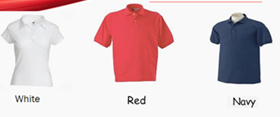
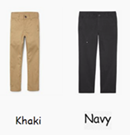
All visible clothing must be a solid red, white, navy blue, or khaki. Solid navy blue, red, or white colored shirts. Bottoms must be navy or khaki. Only school color Cardinal Wear sports hoodies are acceptable.
- Shirts: Long or short-sleeved shirt in uniform colors (solid red, white, or blue - no logos). Sweaters or sweatshirts without hoods may be worn over- shirt.
- Footwear: The feet must be covered with shoes. House slippers, flip-flops, sandals, Crocs, and slides are not to be worn.
- Bottoms: Students are allowed to wear pants with elastic at the bottom. However, joggers or leggings are NOT allowed.
Masks are not required, but may be requested.
- Students must be dressed fully from the shoulder to the mid-thigh, this clothing cannot be see through. Slits or splits in clothing should be modest and appropriate for an academic setting. Students shall not wear tank tops, halter-tops, garments with spaghetti straps, or strapless garments. No Leggings should be worn. Garments that are “see-through”, cut low, or expose one’s midriff or undergarments, are not acceptable. Undergarments must not be visible when either standing or sitting. Sleepwear and/or pajamas are not to be worn.
- Coats, gloves, jackets, including cold weather outdoor ski vests, headscarves, hats, head coverings, hoods, and sunglasses may not be worn in the school and must be stored in the hall lockers during the school day. Head coverings, sweatbands, bandanas of any kind are not to be worn at any time in the building unless required for religious or medical reasons. Exceptions may be made at the discretion of the principal or his/her designee.
- Students may not display and/or wear clothing, jewelry, or tattoos displaying obscenities, inappropriate, provoking, dangerous, distracting, or that creates a disturbance to the educational process (ex. Displays or condones anti-social, immoral, or illegal behavior, or promotes or condones alcohol, tobacco, drugs, profanity, sex, death, gangs, etc.) will not be permitted. Defamatory slogans related to ethnicity, culture, gender, etc. on clothing are also prohibited.
- Book bags and backpacks in which to carry books and other school materials may or may not be allowed in the classroom. Ladies may carry a small purse or fanny pack. Exceptions may be made at the discretion of the Principal or his/ her designee.
- Students shall not wear pants that sag or fit below the waist (i.e. while standing, walking, and sitting, top attire must touch bottoms attire all the way around). All undergarments must be covered by outerspace attire and see through attire is not allowed. All pants must fit around the waist and be properly fastened. Pants cannot be worn inside out.
Fully realizing that dress, appearance, and grooming change continuously, the administration reserves the right to determine what is appropriate. The determination will be based on whether a student’s dress, appearance, and grooming may create health, sanitation, safety, or disruptive attention to the student population, thereby impacting the educational climate of the school.
Exceptions to the Dress Code
While the safety and appropriateness of student attire will always be warranted and enforced during school and school-related functions, the uniformity of colors policy need not be adhered to during physical education classes, extracurricular, athletic, academic, dramatic, or musical events or ceremonies unless required by the staff member supervising the event. Other appropriate attire requirements may be made for such events by faculty sponsors and/or Administration. Further exceptions to the dress code will be determined and implemented by Administration (e.g., dress-up/dress-down day, school spirit days, etc.).

